
'Stay invested but progressively reduce risk. Beyond a point, the objective should shift from maximising returns to avoiding unpleasant surprises.'

rediffGURU T S Khurana answers readers' personal income tax queries.
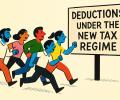
Most think tax-saving deductions exist only in the old regime. But the New one quietly retains 40+ ways to ease your tax load

Rural India outpaced urban centres in passenger vehicle sales in 2025, recording a growth of 12 per cent compared with 8 per cent in cities.

Shares of Infosys surged nearly 4 per cent on Wednesday, a day before the opening of the tender window for its Rs 18,000-crore share repurchase programme. The buyback, which will see the company repurchase 100 million outstanding shares at Rs 1,800 each, will remain open until November 26.
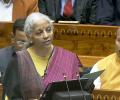
Budget 2026 sticks to fiscal discipline, shuns populist measures despite five key state elections coming up, but ends up rattling stock markets with a higher transaction tax on derivatives trading.

GST Reform 2.0, which trims tax slabs from four to two, signals a push for demand-led growth, and together with recent income tax cuts, sets the stage for sustained economic growth, experts said. The Goods and Services Tax (GST) Council on September 3 approved an overhaul of the indirect tax regime by taxing essentials at 5 per cent and other goods at 18 per cent. A new 40 per cent tax will be applicable on luxury and sin items.

Zero-coupon bonds suit investors with long-term goals such as retirement or education planning.

The Federation of Indian Chambers of Commerce and Industry (Ficci) has sought urgent steps to clear the huge backlog of income-tax appeals, simplify tax deducted at source (TDS) compliance, and ensure tax neutrality for fast-track demergers, during its consultation with Revenue Secretary Arvind Shrivastava ahead of the Union Budget 2026-27.

Any reduction on purifiers would need consensus among state finance ministers.
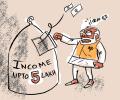
Policymakers are examining the possibility of increasing the tax-free slab to Rs 5 lakh in the two-year-old alternative personal income tax regime to make it attractive, a government official said. At present, taxpayers don't pay income tax if their taxable income is Rs 2.5 lakh and below. Increasing the threshold will reduce the tax outgo for assessees, thereby leaving more money with them to invest, the official said.

The finance ministry on Friday said it has proposed a two-slab GST rate structure to the Group of Ministers (GoM), along with special rates for select items.

What does this mean for you? Ramalingam Kalirajan explains.

The government should refrain from raising income tax surcharge on the super-rich and reintroducing wealth tax in the upcoming 2026-27 Budget, as the move could prompt persons in high-income brackets to leave the country for low-tax jurisdictions, according to tax experts.
The central government has proposed just two tax rates of 5 per cent and 18 per cent in the revamped Goods and Services Tax (GST), slated to replace the current indirect tax regime by Diwali this year, highly placed sources said.

Amid the impending rejig in the goods and services tax (GST) rates, an association representing the country's beverages industry has appealed to the Centre to not classify aerated beverages as sin/demerit good and bring it under the 18 per cent slab while citing their "mass consumption" as a reason.

The Delhi High Court has asked the central government why it cannot reduce the GST on air purifiers, considering the poor air quality in Delhi. The court's concern is that the current 18% GST makes air purifiers unaffordable for the common man.

After issuing notices to hotels across the country for allegedly underpaying goods and services tax (GST) on restaurant services, the revenue department has now widened its scrutiny by seeking information from online travel platforms.

'We kept this Budget on a larger plank, rather than on one incident, however serious.'


The life and non-life insurance industries are hopeful of a reduction in the goods and services tax (GST) on health and life insurance premiums, after Prime Minister Narendra Modi, in his speech on Friday, announced GST relaxations aimed at providing relief to ordinary citizens, farmers, the middle class, and the small and medium enterprises (MSME) sector.

'The adjustments (of tax slabs and standard deduction) will reduce the tax burden for salaried individuals with an income of around Rs 20 lakh by approximately Rs 18,000.' 'For non-salaried individuals with the same income level, the savings will be around Rs 10,000.'

NPS Vatsalya offers a disciplined investment avenue that parents can use to create intergenerational wealth by contributing even small sums.

The contrast with the old Income-Tax Act is stark. The 1961 law ran into 512,000 words; the 2025 one pares that down to 259,000. Chapters have been cut from 47 to 23, while sections have reduced from 819 to 536. One of the clearest changes is terminological. The confusing twin concepts of 'assessment year' and 'previous year' have been scrapped.

The GST Council on Wednesday approved a two-tier rate structure of 5 and 18 per cent, which will be implemented from September 22.
Fitch Ratings on Monday affirmed India's sovereign rating at 'BBB-', with a stable outlook, saying a strong record of delivering growth and improving fiscal credibility will drive improvements in structural metrics. "India's ratings are supported by its robust growth and solid external finances," Fitch said, as it forecast GDP growth of 6.5 per cent in the fiscal year ending March 2026 (FY26), unchanged from FY25, and well above the 'BBB' median of 2.5 per cent.

Your choice between the Old and New Tax Regimes should reflect your financial strategy and investment goals, says Ramalingam Kalirajan

Amid the Budget preparation, the revenue department is assessing the feasibility of further adjustments to maximise benefits for salaried individuals.
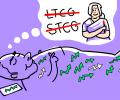
Implications for capital gains, wealth taxes, and investment strategies require careful consideration, notes Anil Rego, founder and CEO, RightHorizons.

These changes certainly bring India's GST a lot closer to what an ideal GST would look like, points out Karan Bhasin.

'Ek baar aap GST dekh lo!' - Prime Minister Narendra Modi's gentle nudge to Finance Minister Nirmala Sitharaman in December last year sparked the beginning of a mammoth exercise to overhaul the tangled goods and services tax regime. And the final outcome is a significantly simplified system with lower tax rates and easier compliance for businesses.

Ask rediffGURU and tax expert Mihir Tanna your income tax-related questions.

rediffGURU Vipul Bhavsar answers readers' personal income tax queries.

The GST Council, in its meeting on Saturday, is likely to decide on reducing tax rates on life and health insurance premiums, while hiking it on high-end wrist watches, shoes and apparels, besides considering a separate 35 per cent tax slab for sin goods. The 55th meeting of the GST Council, chaired by Union Finance Minister Nirmala Sitharaman and comprising state counterparts, is likely to discuss rate rejig in about 148 items, besides, it will also deliberate on bringing Aviation Turbine Fuel (ATF), a major component for airline industry's operation cost, in the Goods and Services Tax (GST) fold.

India's net direct tax collections contracted 1.3 per cent to about 5.63 trillion as of July 10, with corporate taxes dropping 3.7 per cent and non-corporate taxes recording a fractional 0.04 per cent contraction, Income Tax department data released on Friday revealed.

The appliance makers expect a good churn in the festive season, led by the government's proposal to reduce the GST slab on air-conditioners from the current 28 per cent to 18 per cent, which will reduce the price from Rs 1,500 to Rs 2,500 depending on the models.

The GST Council on Wednesday approved two slabs of 5 per cent and 18 per cent effective from September 22, the first day of Navaratri.

In sops for the middle class, Finance Minister Nirmala Sitharaman on Tuesday hiked standard deduction by 50 per cent to Rs 75,000 and tweaked tax slabs under the new income tax regime to provide more money in the hands of salaried class with a view to boost consumption. She said salaried employees in the new tax regime could save up to Rs 17,500 in income tax annually following the changes announced in the Budget. The standard deduction for salaried employees is proposed to be increased from Rs 50,000 to Rs 75,000 annually.
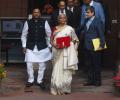
Finance Minister Nirmala Sitharaman on Saturday unveiled 'transformative' tax reforms that ranged from a simpler income tax law to higher TCS threshold for remittances and income tax benefits for middle class.

Prime Minister Modi urged the people of the country to take pride in selling and buying indigenous goods.
 © 2026 Rediff.com - Advertise with us - Disclaimer - Privacy Policy - Sitemap - Feedback - About us - Terms of use - Grievances